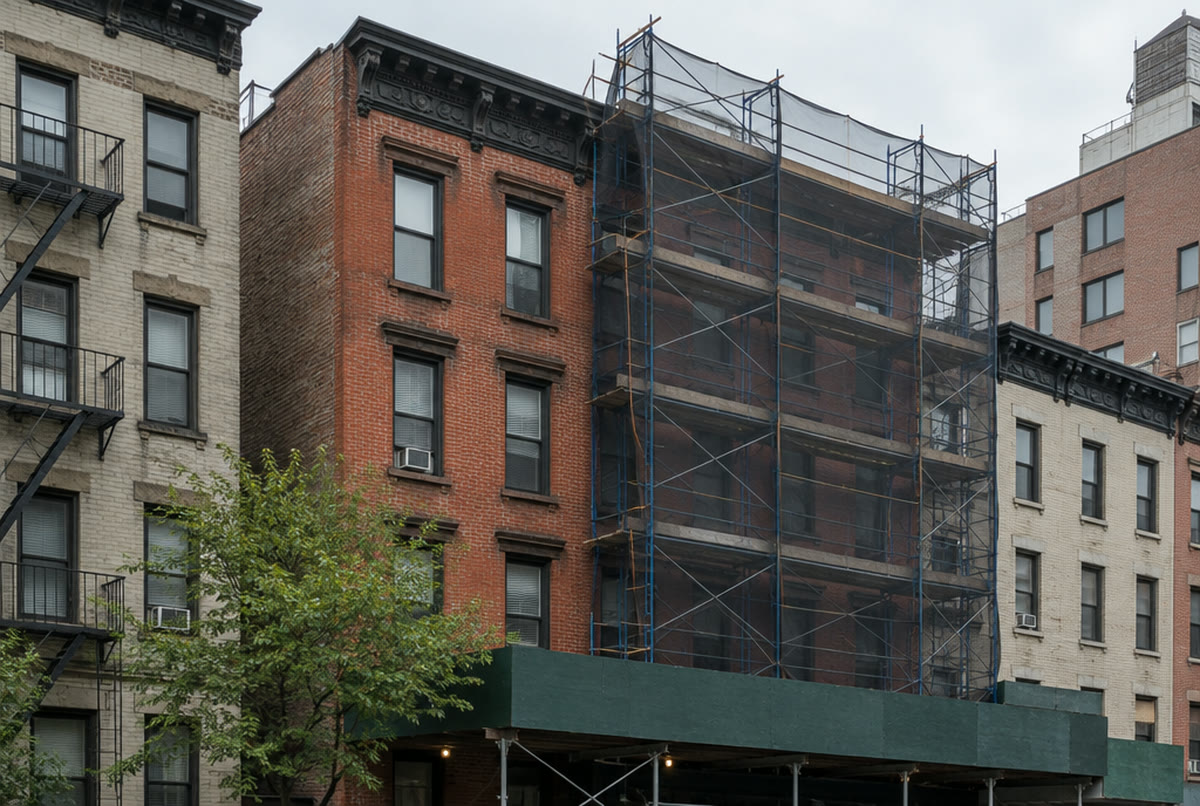
An older commercial building in New York may appear attractive because of its relatively low purchase price. Converting upper floors into apartments or transforming vacant commercial space into a new use can create significant investment value. However, owning a property does not necessarily give an investor the legal right to develop it as intended. In New York, zoning regulations, municipal approvals, building codes, and financing requirements can substantially affect whether a proposed project is feasible. A property that appears inexpensive at acquisition may ultimately prove costly or unsuitable for redevelopment.
Property Ownership Does Not Guarantee Development Rights
The first step in evaluating a development opportunity is understanding the zoning regulations of the relevant municipality. Zoning determines permitted uses, building height, density, parking requirements, setbacks, and other development restrictions. A property currently used for retail or office purposes cannot necessarily be converted into residential apartments without additional approvals. Even where residential use is permitted, the number of allowable units and applicable development conditions must be verified. Existing buildings may also benefit from lawful nonconforming uses that do not automatically extend to new construction or changes in use.
In many New York municipalities, redevelopment may require Site Plan Approval or a Special Use Permit from the Planning Board or another authorized body. If the proposed project does not comply with zoning requirements, a variance from the Zoning Board of Appeals may be necessary. Importantly, an Area Variance involving dimensional restrictions and a Use Variance permitting an otherwise prohibited use are subject to different legal standards, with use variances generally requiring a more demanding showing. Investors should therefore distinguish between a property that can be developed as of right and one whose economic viability depends on discretionary government approval.
Building Codes and Environmental Review
Zoning approval is only one part of the development process. Converting an older commercial building into apartments, offices, or public assembly space may trigger requirements involving fire protection, emergency exits, accessibility, ventilation, and structural safety. New York's building regulations impose specific obligations when a property's use or occupancy classification changes, and an appropriate Certificate of Occupancy may be required before the renovated space can be lawfully occupied. Architectural plans that appear financially attractive may require substantial revisions once these requirements are considered.
Environmental conditions can create additional uncertainty. Under New York's State Environmental Quality Review Act (SEQRA), certain discretionary government approvals require environmental review, and projects with potentially significant impacts may require further assessment. Properties previously used for manufacturing, automotive repair, or industrial activities may also warrant environmental due diligence, including Phase I and, where appropriate, Phase II assessments. Contamination, asbestos, or outdated building systems can materially increase construction costs and complicate financing. These risks should be investigated before closing, with appropriate inspection rights and contractual protections considered during acquisition.
Construction Financing and Development Risk
Real estate development requires a different financing analysis from the acquisition of an existing income-producing property. Construction lenders may require approved plans, permits, detailed budgets, contractor agreements, equity contributions, and appraisals based on the property's anticipated completed value. Loan proceeds are often disbursed through construction draws tied to verified progress rather than paid entirely at closing. Delays in municipal approvals or unexpected construction expenses can therefore create funding gaps while interest, taxes, insurance, and other carrying costs continue to accumulate.
A lender's willingness to finance a project should not be confused with an unconditional commitment to fund construction. Developers must review loan conditions, completion guarantees, additional equity obligations, and disbursement requirements. The true cost of redevelopment includes architectural and engineering fees, environmental investigations, financing expenses, permit costs, potential vacancy, and contingency reserves. Where existing tenants remain in possession, lease terms and the ability to obtain vacant space may also affect the construction schedule. A favorable purchase price means little if the developer cannot obtain approvals or secure sufficient capital to complete the project.
Can PILOT and IDA Incentives Make Development More Attractive?
Certain New York development projects may qualify for assistance through an Industrial Development Agency (IDA), including Payments in Lieu of Taxes (PILOT) arrangements. Depending on the project and applicable law, assistance may also include eligible sales tax or mortgage recording tax benefits. These programs can improve project economics, particularly where redevelopment supports qualifying economic development objectives. However, eligibility is not automatic. Residential and mixed-use projects may face statutory restrictions, and public benefits, local policies, and required approval procedures must be evaluated.
IDA assistance may involve public hearings, financial disclosures, and ongoing obligations concerning investment, employment, or project operations. Failure to satisfy agreed conditions can result in modification or recapture of benefits. Consequently, anticipated tax incentives should not be treated as guaranteed savings before formal approval. A project that contributes to downtown revitalization may present a compelling public benefit, but that contribution alone does not establish a legal entitlement to financial assistance.
Development Value Begins With Legal Feasibility
The potential value of redevelopment often depends less on what a building is today than on what it can legally become. Yet that potential can only be realized when zoning, building requirements, environmental considerations, municipal approvals, and construction financing are properly coordinated. For Korean investors considering American real estate development, legal and financial due diligence should begin before the acquisition agreement is finalized.
The most important question is not whether a building can be purchased inexpensively, but whether the proposed development can actually be approved, financed, completed, and lawfully occupied.