For decades, the U.S.–Korea alliance was discussed chiefly in terms of security: American troops, defense commitments, and North Korea. Today, different figures dominate bilateral negotiations—power plant construction costs, nuclear infrastructure, shipyard modernization, and investments in advanced technology. Security has not disappeared from the relationship. Rather, economic and security priorities are becoming intertwined, making questions about where production takes place, who supplies capital, and how risks and returns are shared central to diplomacy.
Under the 2025 bilateral framework, South Korea pledged a $350 billion investment package, including $150 billion for shipbuilding and $200 billion for strategic industries. In October 2026, the two governments announced plans to advance a gas-fired power project in Texas, a framework for nuclear cooperation, and an examination of the proposed Alaska LNG development. Seoul has emphasized that Alaska LNG remains subject to commercial and legal evaluation. Bilateral cooperation is moving beyond the trade in finished goods toward long-term capital commitments to American industrial infrastructure.
The U.S.–Korea Free Trade Agreement, effective since 2012, established rules for market access, investment, and dispute resolution. The newer framework adds a different question: not just how Korean manufacturers sell to American customers, but how they build and operate facilities in the United States.
When an Alliance Speaks the Language of Investment
In May 2026, the U.S. Department of Commerce and Korea's Ministry of Trade, Industry and Resources signed a memorandum of understanding establishing a bilateral shipbuilding partnership initiative. Its objectives include industrial modernization, workforce development, technical exchanges, and investment in the American maritime industrial base. Unlike exports, these activities create obligations involving local employment, regulation, construction, and long-term contracts. Shared goals do not eliminate the risks assumed by individual companies.
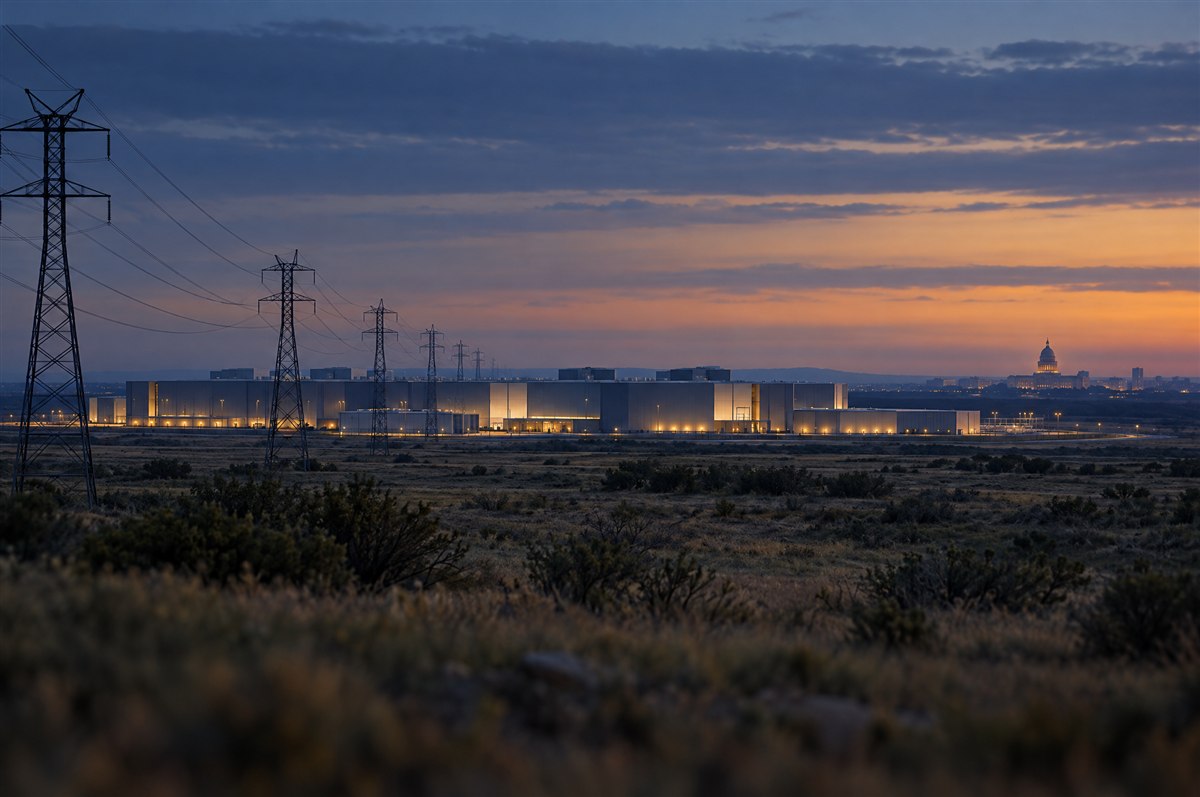
The Texas power project illustrates the new relationship. The announced $22.3 billion initiative envisions gas-fired generation supplying nearby AI data centers. Energy, technology, real estate development, and project finance come together in one investment. But an announcement does not build a power plant. Power purchase agreements, fuel supply contracts, land-use approvals, financing terms, and responsibility for construction delays must be resolved before the project can operate. Governments may present an initiative as a diplomatic achievement while lenders and investors still need to determine how its risks are allocated.
Diplomatic Agreements Are Not the Same as Enforceable Project Rights
An intergovernmental memorandum may establish the direction of cooperation, but it does not automatically guarantee an individual investor's returns or contractual rights. The KORUS FTA, the strategic investment MOU, and project financing agreements operate at different legal levels. Actual projects require corporate structures, permits, and enforceable commercial contracts. Confusing a diplomatic announcement with a legally secured business interest can lead to costly assumptions.
South Korea adopted legislation in 2026 to establish domestic procedures for managing strategic investments under the bilateral framework. The law makes commercial viability a governing principle while requiring consistency with national economic and industrial interests. Projects lacking adequate commercial viability may nevertheless be pursued for exceptional national security or supply-chain reasons, subject to prescribed parliamentary committee consent. A project considered strategically desirable is not necessarily commercially viable. The law must still address approval, financial exposure, and accountability.
Korean investors must also comply with applicable American law. Depending on a transaction's structure and activities, the Committee on Foreign Investment in the United States (CFIUS) may have jurisdiction to examine national security concerns. Not every investment from Korea requires CFIUS review, and allied-country status does not itself create a blanket exemption. Energy projects may face additional federal or state permitting, environmental requirements, and long-term procurement obligations. Diplomatic closeness does not waive regulatory requirements.
Capital Mobility Creates Benefits—and Obligations
Expanded Korean investment may strengthen U.S. manufacturing capacity, employment, and supply-chain resilience. Korean companies may gain closer access to customers, technology partnerships, and long-term contracts. But these benefits must be assessed alongside financing costs, currency exposure, possible reductions in domestic investment capacity, and the allocation of losses if a project fails. What matters is where value is created, how it is distributed, and who bears losses.
Economic diplomacy will increasingly be tested by implementation rather than by the size of announced commitments. Governance rights, profit-sharing arrangements, dispute resolution provisions, and mechanisms for adapting to changed conditions can determine whether cooperation survives beyond the initial announcement. This matters especially for energy, shipbuilding, and nuclear projects, whose development and operating horizons may extend over decades. Political priorities, interest rates, labor conditions, and supply chains can change long before an investment reaches maturity. Contracts cannot remove these risks, but can allocate responsibility.
The Expertise Required by a New Economic Diplomacy
It would be misleading to say that an economic alliance is replacing a security alliance. The two are increasingly interdependent. Diplomacy identifies shared objectives, policy shapes industrial priorities, and law determines how capital, technology, and contractual responsibility move across borders. Working between Korea and the United States reveals how differently the same project can be viewed from Washington's policy perspective, a Korean company's financial analysis, and the local American permitting process. Sustainable cooperation does not require those perspectives to be identical. It requires them to be reconciled through commitments that can actually be performed.
The next phase of the alliance should therefore be measured not simply by the scale of investment promised, but by the rules under which that capital is deployed and the responsibilities that follow.
An alliance may begin with political trust, but economic trust is ultimately built through agreements that can be implemented.